Buy forumtrzeciegowieku.pl ?
We are moving the project
forumtrzeciegowieku.pl .
Are you interested in purchasing the domain
forumtrzeciegowieku.pl ?
domain@kv-gmbh.de · 0541-91531010
Buy forumtrzeciegowieku.pl ?
Which FOS is meant: Technology or Economics?
The FOS (Field of Study) that is meant can vary depending on the context. If the question is asking about a specific academic program or course, then the FOS would be Technology or Economics, depending on the focus of the program. If the question is asking about a specific career or industry, then the FOS would also depend on the specific field within Technology or Economics. It's important to clarify the context in order to determine which FOS is being referred to. **
What is the difference between management and economics, and health management and economics?
Management is the process of planning, organizing, and coordinating resources to achieve organizational goals, while economics is the study of how individuals, businesses, and societies allocate resources to satisfy their needs and wants. Health management and economics, on the other hand, focus specifically on the management and economic aspects of the healthcare industry. This includes the allocation of resources within healthcare organizations, the impact of healthcare policies on the economy, and the economic factors influencing healthcare delivery and access. In essence, health management and economics combine the principles of management and economics to address the unique challenges and opportunities within the healthcare sector. **

Similar search terms for Economics
Top-Angebote
Products related to Economics:
-
Left Behind: A New Economics for Neglected Places by Paul Collier HardcoverDescription. Condition: Brand New. Format : Hardcover. The world-renowned economist offers a ground-breaking new vision for inclusive prosperity. Left behind places can be found in prosperous countries―from South Yorkshire, integral to the industrial revolution and now England’s poorest county, to Barranquilla, once Colombia’s portal to the Caribbean and now struggling. More alarmingly, the poorest countries in the world are diverging further from the rest of humanity than they were at the start of this century. Why have these places fallen behind? And what can we do about it?. World-renowned development economist Paul Collier has spent his life working in neglected communities. In this book he offers his candid diagnosis of why some regions and countries are failing, and a new vision for how they can catch up. Collier lays the blame for widening inequality on stale economic orthodoxies that prioritize market forces to revive left behind regions, and on the arrogant, hands-off and one-size fits all approach of centralized bureaucracies like the UK Treasury. As a result, Collier argues, the UK has become the most unequal and unfair society in the western world.. Yet the core message of Left Behind is hopeful: bringing together encouraging case studies of recovery from around the world, Collier shows how renewal is achievable through a combination of collective learning, moral leadership and local agency. With keen insight, he draws lessons from such seemingly disparate fields as behavioural psychology, evolutionary biology and moral philosophy to share a bold, galvanizing vision for a more inclusive, prosperous world.. Title. Death Note Box Set: Vols 1-13: Volumes 1 - 13. Delivery. Content. Reviews18,67 £*Shipping: 2,99 £Secure redirect to the provider
-
Ha-Joon Chang Collection 3 Books Set Economics, Bad Samaritans,23 Things TheyDescription. Condition: BRAND NEW. Format: Paperback. Bad Samaritans: The Guilty Secrets of Rich Nations and the Threat to Global Prosperity .... It's rare that a book appears with a fresh perspective on world affairs, but renowned economist Ha-Joon Chang has some startlingly original things to say about the future of globalization. In theory, he argues, the world's wealthiest countries and supra-national institutions like the IMF, World Bank and WTO want to see all nations developing into modern industrial societies. In practice, though, those at the top are 'kicking away the ladder' to wealth that they themselves climbed.... 23 Things They Don't Tell You About Capitalism. In this revelatory book, Ha-Joon Chang destroys the biggest myths of our times and shows us an alternative view of the world, including:. There's no such thing as a 'free' market. Globalization isn't making the world richer. We don't live in a digital world - the washing machine has changed lives more than the internet.. Economics: The User's Guide: A Pelican Introduction (Pelican Books) .. Ha-Joon Chang teaches economics at Cambridge University, and writes a column for the Guardian. The Observer called his book 23 Things They Don't Tell You About Capitalism, which was a no.1 bestseller, 'a witty and timely debunking of some of the biggest myths surrounding the global economy.' He won the Wassily Leontief Prize for advancing the frontiers of economic thought, and is a vocal critic of the failures of our current economic system.. Title. Ha-Joon Chang Collection 3 Books Set Economics, Bad Samaritans,23 Things They. Delivery. Content. Reviews28,99 £*Shipping: 2,99 £Secure redirect to the provider
-
Behavioural Economics Saved My Dog: Life Advice For The Imperfect Human, Dan ArielyDescription. Internationally bestselling author Dan Ariely brings his unique perspective to bear on a maelstrom of life’s problems – from how to deal with a Christmas card list that’s fast becoming unmanageable to whether or not you should have children.. Ariely changed the way we view ourselves, how we think and how we act, with his book Predictably Irrational. In his immensely popular Wall Street Journal advice column, where readers “Ask Ariely” for his help with various dilemmas, he provides a logical view on the seemingly illogical, shedding light on the most curious minutiae of human behaviour.. With a helping hand from legendary New Yorker cartoonist William Haefeli, Ariely’s new book will make you laugh at the ridiculous aspects of our daily existence just as you gain a new perspective on how to handle the inevitable challenges that life brings us all.. Title. Behavioural Economics Saved My Dog: Life Advice For The Imperfect Human, Dan Ariely. Delivery. Content. Reviews7,32 £*Shipping: 2,99 £Secure redirect to the provider
-
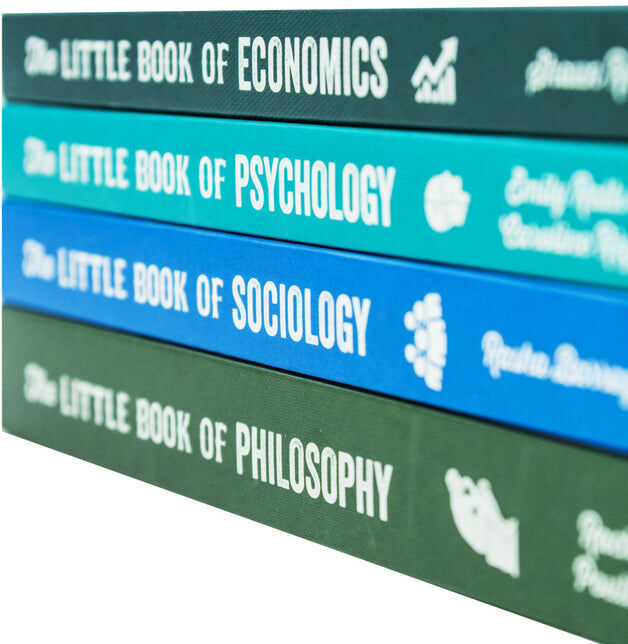
Summersdale Publishers The Little Book of Philosophy, Sociology, Economics & Psychology 4 Books Collection SetThe Little Book of Philosophy Philosophy is a quest for wisdom and knowledge; philosophia in Ancient Greek literally means “love of wisdom”. The aim of philosophy is to ask and explore life’s big questions to help us work out what we can know and how we can live a good life. Today, in a world of fake news, embarking on a quest for truth couldn’t be more important. The Little Book of Sociology From the smallest everyday interaction to the impact of vast systemic change, societies are brimming with fascinating phenomena we all want to understand more clearly.There's never been a more important moment to grasp what's going on around us, and this pocket-sized guide offers an engaging introduction to the key sociological concepts. The Little Book of Economics This Book will bring you up to speed on the basics of micro- and macroeconomics and demystify the world of taxes, trade, investments and finance, in simple English and with easy-to-follow examples.By the end of this crash course, you will have a grasp on all the essential terms, concepts and theories you need to know to understand modern-day. The Little Book of Psychology If you want to know your Freud from your Jung and your Milgram from your Maslow, strap in for this whirlwind tour of the highlights of psychology. Including accessible primers on: - The early thinkers who contributed to psychological ideas and the birth of modern psychology- Famous (and often controversial) experiments and their repercussions.12,99 £*Shipping: 2,99 £Secure redirect to the provider


-
What is the exact difference between health management and health economics?
Health management focuses on the organization and administration of healthcare services, including planning, coordinating, and supervising the delivery of healthcare. On the other hand, health economics deals with the study of how healthcare resources are allocated, including the costs and benefits of healthcare interventions, the efficiency of healthcare systems, and the impact of healthcare policies on individuals and populations. In essence, health management is more about the operational aspects of healthcare delivery, while health economics is more focused on the financial and economic aspects of healthcare. **
-
What is the study program Health Management and Economics?
The study program Health Management and Economics is a multidisciplinary field that combines principles of healthcare management, economics, and public health. It focuses on the efficient and effective delivery of healthcare services, as well as the economic factors that influence healthcare systems. Students in this program learn about healthcare policy, finance, quality improvement, and strategic management, and how to apply economic principles to healthcare decision-making. Graduates of this program are prepared for careers in healthcare administration, health policy analysis, consulting, and other related fields. **
-
How can one switch from business education to economics?
To switch from business education to economics, one can start by taking courses in economics to build a foundational knowledge in the subject. It would also be beneficial to seek out internships or work opportunities in economics-related fields to gain practical experience. Additionally, networking with professionals in the economics field and seeking guidance from academic advisors can help in making a successful transition from business education to economics. **
-
What is the difference between economics and business education?
Economics education focuses on the study of how societies allocate resources to meet their needs and wants, and the impact of those decisions on individuals, businesses, and governments. It includes the study of economic theories, principles, and models to understand how markets work and how economic policies are formulated and implemented. On the other hand, business education focuses on the practical aspects of running a business, including management, marketing, finance, and operations. It prepares students for careers in business by providing them with the skills and knowledge needed to succeed in the corporate world. While economics provides a broader understanding of the economy and its impact on society, business education is more focused on the practical aspects of managing and operating a business. **


What is the difference between Quantitative Economics and Economics?
Quantitative economics is a subfield of economics that focuses on using mathematical and statistical methods to analyze economic phenomena, while economics is a broader field that encompasses the study of how societies allocate scarce resources to satisfy unlimited wants. Quantitative economics emphasizes the use of data and mathematical models to understand and predict economic behavior, while economics encompasses a wider range of topics, including microeconomics, macroeconomics, international economics, and development economics. In essence, quantitative economics is a more specialized and technical approach within the broader field of economics. **
Which subject is taught in 10th grade: Information Technology or Economics?
In 10th grade, students are typically taught Economics. This subject covers topics such as microeconomics, macroeconomics, and economic systems. Information Technology may also be offered as a separate course, but it is less commonly taught in 10th grade compared to Economics. **
Top-Angebote
Products related to Economics:
-
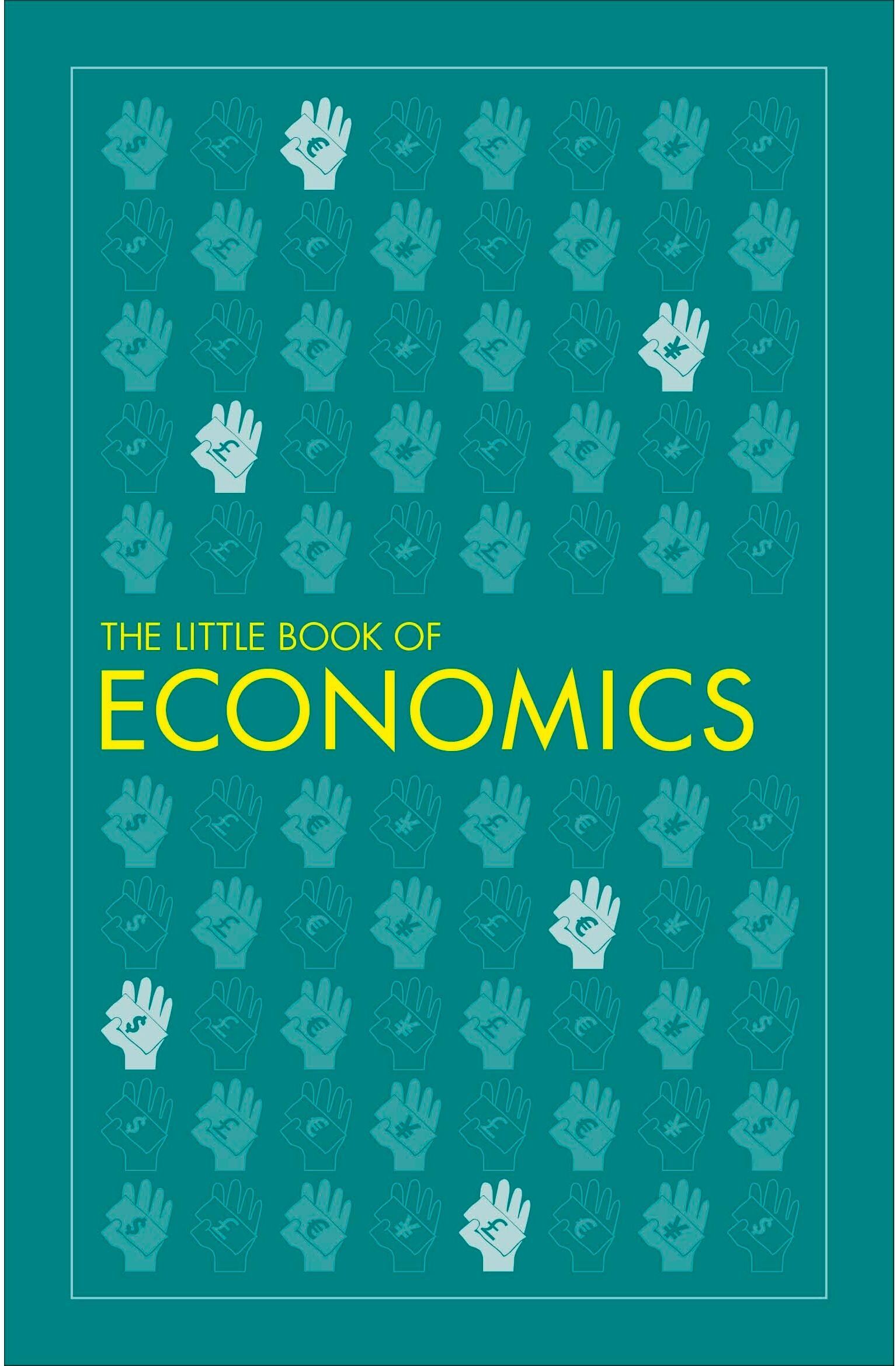
The Little Book of Economics (DK Big Ideas Series)This book is the perfect introduction to the subject of economics and economic ideas through history. From the earliest forms of currency to the Industrial Revolution, and from the birth of the stock market to free-market capitalism and globalized trade, The Little Book of Economics brings economic theory and the work of key economists to life. Journeying through centuries of economic thought, it is the perfect pocket-sized guide to the subject. Packed with infographics and flowcharts that explain complex concepts clearly and simply, The Little Book of Economics offers you a combination of clear text and hard-working infographics in a portable format that is perfect for reading on the go.5,99 £*Shipping: 2,99 £Secure redirect to the provider
-
Misbehaving: The Making of Behavioural Economics, Richard H. ThalerDescription. RICHARD H. THALER: WINNER OF THE 2017 NOBEL PRIZE IN ECONOMICS. Shortlisted for the Financial Times and McKinsey Business Book of the Year Award. ECONOMIST, FINANCIAL TIMES and EVENING STANDARD books of the year. From the renowned and entertaining behavioural economist and co-author of the seminal work Nudge, Misbehaving is an irreverent and enlightening look into human foibles. Traditional economics assumes that rational forces shape everything. Behavioural economics knows better. Richard Thaler has spent his career studying the notion that humans are central to the economy - and that we're error-prone individuals, not Spock-like automatons. Now behavioural economics is hugely influential, changing the way we think not just about money, but about ourselves, our world and all kinds of everyday decisions.. Title. Misbehaving: The Making of Behavioural Economics, Richard H. Thaler. Delivery. Content. Reviews9,99 £*Shipping: 2,99 £Secure redirect to the provider
-
Left Behind: A New Economics for Neglected Places by Paul Collier HardcoverDescription. Condition: Brand New. Format : Hardcover. The world-renowned economist offers a ground-breaking new vision for inclusive prosperity. Left behind places can be found in prosperous countries―from South Yorkshire, integral to the industrial revolution and now England’s poorest county, to Barranquilla, once Colombia’s portal to the Caribbean and now struggling. More alarmingly, the poorest countries in the world are diverging further from the rest of humanity than they were at the start of this century. Why have these places fallen behind? And what can we do about it?. World-renowned development economist Paul Collier has spent his life working in neglected communities. In this book he offers his candid diagnosis of why some regions and countries are failing, and a new vision for how they can catch up. Collier lays the blame for widening inequality on stale economic orthodoxies that prioritize market forces to revive left behind regions, and on the arrogant, hands-off and one-size fits all approach of centralized bureaucracies like the UK Treasury. As a result, Collier argues, the UK has become the most unequal and unfair society in the western world.. Yet the core message of Left Behind is hopeful: bringing together encouraging case studies of recovery from around the world, Collier shows how renewal is achievable through a combination of collective learning, moral leadership and local agency. With keen insight, he draws lessons from such seemingly disparate fields as behavioural psychology, evolutionary biology and moral philosophy to share a bold, galvanizing vision for a more inclusive, prosperous world.. Title. Death Note Box Set: Vols 1-13: Volumes 1 - 13. Delivery. Content. Reviews18,67 £*Shipping: 2,99 £Secure redirect to the provider
-
Ha-Joon Chang Collection 3 Books Set Economics, Bad Samaritans,23 Things TheyDescription. Condition: BRAND NEW. Format: Paperback. Bad Samaritans: The Guilty Secrets of Rich Nations and the Threat to Global Prosperity .... It's rare that a book appears with a fresh perspective on world affairs, but renowned economist Ha-Joon Chang has some startlingly original things to say about the future of globalization. In theory, he argues, the world's wealthiest countries and supra-national institutions like the IMF, World Bank and WTO want to see all nations developing into modern industrial societies. In practice, though, those at the top are 'kicking away the ladder' to wealth that they themselves climbed.... 23 Things They Don't Tell You About Capitalism. In this revelatory book, Ha-Joon Chang destroys the biggest myths of our times and shows us an alternative view of the world, including:. There's no such thing as a 'free' market. Globalization isn't making the world richer. We don't live in a digital world - the washing machine has changed lives more than the internet.. Economics: The User's Guide: A Pelican Introduction (Pelican Books) .. Ha-Joon Chang teaches economics at Cambridge University, and writes a column for the Guardian. The Observer called his book 23 Things They Don't Tell You About Capitalism, which was a no.1 bestseller, 'a witty and timely debunking of some of the biggest myths surrounding the global economy.' He won the Wassily Leontief Prize for advancing the frontiers of economic thought, and is a vocal critic of the failures of our current economic system.. Title. Ha-Joon Chang Collection 3 Books Set Economics, Bad Samaritans,23 Things They. Delivery. Content. Reviews28,99 £*Shipping: 2,99 £Secure redirect to the provider
-
Which FOS is meant: Technology or Economics?
The FOS (Field of Study) that is meant can vary depending on the context. If the question is asking about a specific academic program or course, then the FOS would be Technology or Economics, depending on the focus of the program. If the question is asking about a specific career or industry, then the FOS would also depend on the specific field within Technology or Economics. It's important to clarify the context in order to determine which FOS is being referred to. **
-
What is the difference between management and economics, and health management and economics?
Management is the process of planning, organizing, and coordinating resources to achieve organizational goals, while economics is the study of how individuals, businesses, and societies allocate resources to satisfy their needs and wants. Health management and economics, on the other hand, focus specifically on the management and economic aspects of the healthcare industry. This includes the allocation of resources within healthcare organizations, the impact of healthcare policies on the economy, and the economic factors influencing healthcare delivery and access. In essence, health management and economics combine the principles of management and economics to address the unique challenges and opportunities within the healthcare sector. **
-
What is the exact difference between health management and health economics?
Health management focuses on the organization and administration of healthcare services, including planning, coordinating, and supervising the delivery of healthcare. On the other hand, health economics deals with the study of how healthcare resources are allocated, including the costs and benefits of healthcare interventions, the efficiency of healthcare systems, and the impact of healthcare policies on individuals and populations. In essence, health management is more about the operational aspects of healthcare delivery, while health economics is more focused on the financial and economic aspects of healthcare. **
-
What is the study program Health Management and Economics?
The study program Health Management and Economics is a multidisciplinary field that combines principles of healthcare management, economics, and public health. It focuses on the efficient and effective delivery of healthcare services, as well as the economic factors that influence healthcare systems. Students in this program learn about healthcare policy, finance, quality improvement, and strategic management, and how to apply economic principles to healthcare decision-making. Graduates of this program are prepared for careers in healthcare administration, health policy analysis, consulting, and other related fields. **
Similar search terms for Economics
-
Behavioural Economics Saved My Dog: Life Advice For The Imperfect Human, Dan ArielyDescription. Internationally bestselling author Dan Ariely brings his unique perspective to bear on a maelstrom of life’s problems – from how to deal with a Christmas card list that’s fast becoming unmanageable to whether or not you should have children.. Ariely changed the way we view ourselves, how we think and how we act, with his book Predictably Irrational. In his immensely popular Wall Street Journal advice column, where readers “Ask Ariely” for his help with various dilemmas, he provides a logical view on the seemingly illogical, shedding light on the most curious minutiae of human behaviour.. With a helping hand from legendary New Yorker cartoonist William Haefeli, Ariely’s new book will make you laugh at the ridiculous aspects of our daily existence just as you gain a new perspective on how to handle the inevitable challenges that life brings us all.. Title. Behavioural Economics Saved My Dog: Life Advice For The Imperfect Human, Dan Ariely. Delivery. Content. Reviews7,32 £*Shipping: 2,99 £Secure redirect to the provider
-
Summersdale Publishers The Little Book of Philosophy, Sociology, Economics & Psychology 4 Books Collection SetThe Little Book of Philosophy Philosophy is a quest for wisdom and knowledge; philosophia in Ancient Greek literally means “love of wisdom”. The aim of philosophy is to ask and explore life’s big questions to help us work out what we can know and how we can live a good life. Today, in a world of fake news, embarking on a quest for truth couldn’t be more important. The Little Book of Sociology From the smallest everyday interaction to the impact of vast systemic change, societies are brimming with fascinating phenomena we all want to understand more clearly.There's never been a more important moment to grasp what's going on around us, and this pocket-sized guide offers an engaging introduction to the key sociological concepts. The Little Book of Economics This Book will bring you up to speed on the basics of micro- and macroeconomics and demystify the world of taxes, trade, investments and finance, in simple English and with easy-to-follow examples.By the end of this crash course, you will have a grasp on all the essential terms, concepts and theories you need to know to understand modern-day. The Little Book of Psychology If you want to know your Freud from your Jung and your Milgram from your Maslow, strap in for this whirlwind tour of the highlights of psychology. Including accessible primers on: - The early thinkers who contributed to psychological ideas and the birth of modern psychology- Famous (and often controversial) experiments and their repercussions.12,99 £*Shipping: 2,99 £Secure redirect to the provider
-
Rachel Poulton The Little Book of Philosophy, Sociology, Economics & Psychology 4 Books Collection SetDescription. The Little Book of Philosophy:. Philosophy is a quest for wisdom and knowledge; philosophia in Ancient Greek literally means “love of wisdom”. The aim of philosophy is to ask and explore life’s big questions to help us work out what we can know and how we can live a good life. Today, in a world of fake news, embarking on a quest for truth couldn’t be more important.. The Little Book of Sociology:. From the smallest everyday interaction to the impact of vast systemic change, societies are brimming with fascinating phenomena we all want to understand more clearly.There's never been a more important moment to grasp what's going on around us, and this pocket-sized guide offers an engaging introduction to the key sociological concepts.. The Little Book of Economics:. This Book will bring you up to speed on the basics of micro- and macroeconomics and demystify the world of taxes, trade, investments and finance, in simple English and with easy-to-follow examples.By the end of this crash course, you will have a grasp on all the essential terms, concepts and theories you need to know to understand modern-day.. The Little Book of Psychology:. If you want to know your Freud from your Jung and your Milgram from your Maslow, strap in for this whirlwind tour of the highlights of psychology. Including accessible primers on: - The early thinkers who contributed to psychological ideas and the birth of modern psychology- Famous (and often controversial) experiments and their repercussions.. Title. The Little Book of Philosophy, Sociology, Economics & Psychology 4 Books Collection Set. Delivery. Content. Reviews99,99 £*Shipping: 0,00 £Secure redirect to the provider
-
Icon Books Introducing Economics: A Graphic Guide Essential Study Book Set - Non Fiction - PaperbackTitle:. Introducing Economics: A Graphic Guide. Format: Paperback. Overview:. Unlock the complex mechanisms of global markets and everyday financial decisions with Introducing Economics: A Graphic Guide. Designed to strip away academic jargon, this accessible paperback transforms dense economic theory into visually engaging, easy-to-digest lessons. Whether you are preparing for an introductory university course, navigating personal finance challenges, or simply curious about how inflation, supply chains, and monetary policy shape modern life, this guide delivers foundational knowledge without the intimidation factor. The book covers essential microeconomic and macroeconomic principles, including consumer behaviour, market structures, taxation systems, and international trade dynamics. Through clear diagrams and conversational explanations, readers gain a practical understanding of how economies function both locally and globally. This non-fiction resource acts as a reliable companion for self-study or classroom supplementation, offering structured chapters that build logically upon one another. By focusing on real-world applications alongside theoretical frameworks, the text ensures that abstract concepts like GDP, employment rates, and fiscal stimulus become tangible ideas you can analyse confidently.. What Makes This Book Stand Out:. What sets this edition apart is its commitment to visual learning without sacrificing academic rigour. Traditional economics textbooks often rely on heavy mathematical modelling and dry prose, which can overwhelm beginners or disengage casual readers. This graphic guide takes a completely different approach, using strategic illustrations, colour-coded charts, and concise narrative blocks to reinforce key takeaways. Each chapter isolates a core concept, demonstrates its practical relevance, and explores common criticisms or alternative viewpoints, fostering critical thinking rather than passive memorisation. The layout is intentionally paced to prevent cognitive overload, allowing readers to pause, reflect, and apply the information immediately. Furthermore, the paperback format ensures portability and durability, making it ideal for library checkout loops, revision sessions, or commuter reading. Unlike superficial summaries, this volume maintains strong educational credibility while remaining approachable, striking a rare balance between scholarly accuracy and reader-friendly design that appeals across diverse learning styles.. Who This Book Is Perfect For:. This volume serves as an ideal entry point for high school students tackling business studies modules, first-year undergraduate learners seeking a supplementary primer, and career-switchers entering finance, consulting, or public policy sectors. Professionals looking to refresh their understanding of macroeconomic cycles or micro-level market forces will find the structured breakdown invaluable for quick reference. Additionally, politically engaged readers,...8,99 £*Shipping: 2,99 £Secure redirect to the provider
-
How can one switch from business education to economics?
To switch from business education to economics, one can start by taking courses in economics to build a foundational knowledge in the subject. It would also be beneficial to seek out internships or work opportunities in economics-related fields to gain practical experience. Additionally, networking with professionals in the economics field and seeking guidance from academic advisors can help in making a successful transition from business education to economics. **
-
What is the difference between economics and business education?
Economics education focuses on the study of how societies allocate resources to meet their needs and wants, and the impact of those decisions on individuals, businesses, and governments. It includes the study of economic theories, principles, and models to understand how markets work and how economic policies are formulated and implemented. On the other hand, business education focuses on the practical aspects of running a business, including management, marketing, finance, and operations. It prepares students for careers in business by providing them with the skills and knowledge needed to succeed in the corporate world. While economics provides a broader understanding of the economy and its impact on society, business education is more focused on the practical aspects of managing and operating a business. **
-
What is the difference between Quantitative Economics and Economics?
Quantitative economics is a subfield of economics that focuses on using mathematical and statistical methods to analyze economic phenomena, while economics is a broader field that encompasses the study of how societies allocate scarce resources to satisfy unlimited wants. Quantitative economics emphasizes the use of data and mathematical models to understand and predict economic behavior, while economics encompasses a wider range of topics, including microeconomics, macroeconomics, international economics, and development economics. In essence, quantitative economics is a more specialized and technical approach within the broader field of economics. **
-
Which subject is taught in 10th grade: Information Technology or Economics?
In 10th grade, students are typically taught Economics. This subject covers topics such as microeconomics, macroeconomics, and economic systems. Information Technology may also be offered as a separate course, but it is less commonly taught in 10th grade compared to Economics. **
* All prices are inclusive of VAT and, if applicable, plus shipping costs. The offer information is based on the details provided by the respective shop and is updated through automated processes. Real-time updates do not occur, so deviations can occur in individual cases. ** Note: Parts of this content were created by AI.